
How Traffic Warrants Work in Palo Alto County
Traffic cases in Palo Alto County run through Iowa's unified district-court system, so there is no separate municipal-court database to search. Judicial magistrates hear simple misdemeanors, traffic matters, and county or municipal infractions within their authority. The Palo Alto County Clerk of Court keeps the local court record, while the Sheriff handles active law-enforcement status and service. A citation with a court date gives you notice. Under Judicial Branch guidance, the fine is due by that date. Ignoring it can bring debt or collection consequences, but an arrest warrant is a separate court event: Iowa Code section 805.5 allows one for the original offense after a willful failure to appear. So call nothing a Palo Alto County traffic warrant just because a ticket went unpaid.
Palo Alto Traffic Warrant Search Fields
Iowa Courts Online gives you two entry points: a trial-court search and a payment search. The payment interface runs in two modes, By Name and By Case or Citation Number. Name mode asks for a first name, last name, case type, and county. Number mode takes a case ID or a citation number. For a Palo Alto County warrant check, enter at least two name characters or the last four to six citation digits where prompted. The official payment and citation search shows the blank fields used to pull up an eligible case.
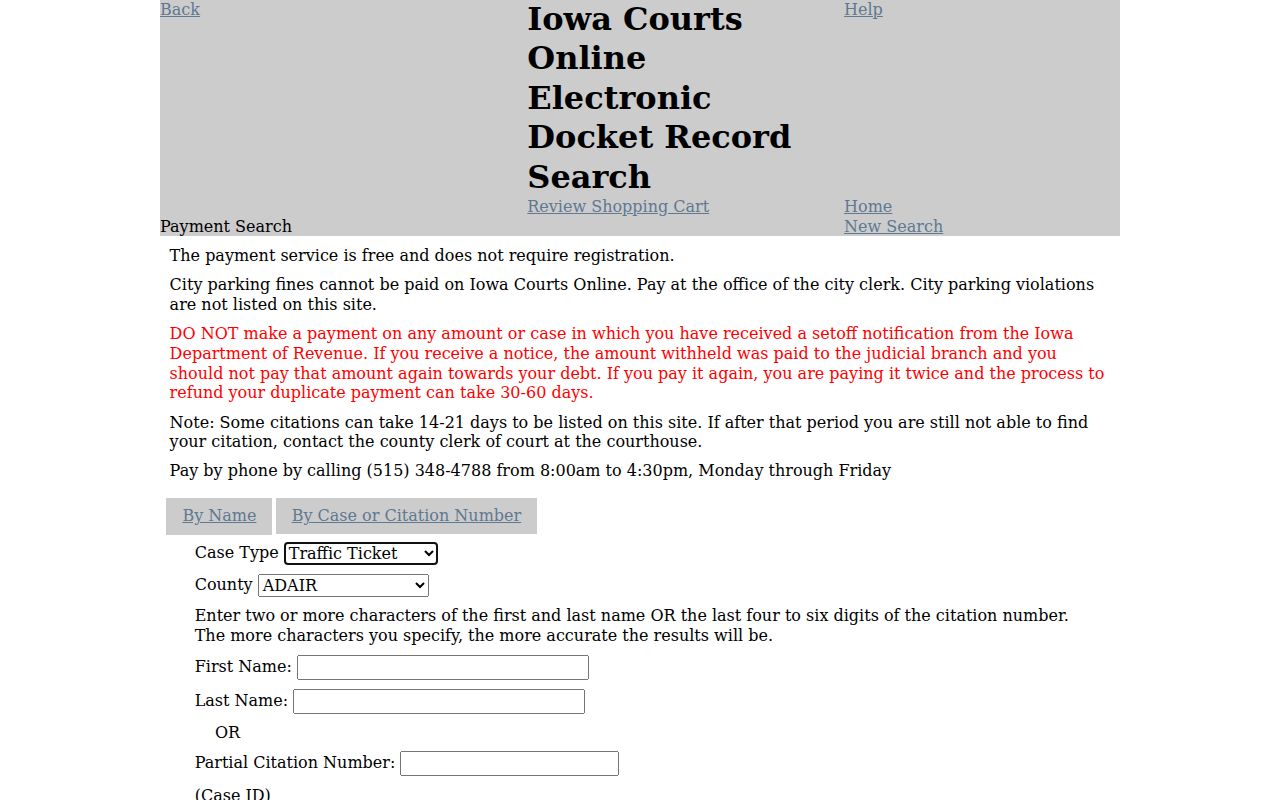
These fields locate court information, not a guaranteed active-warrant status. Set the county to Palo Alto and try codes such as ST for scheduled traffic, NT for nonscheduled traffic, CI for civil infraction, or OW for operating while intoxicated. A code only names the case category. It proves no warrant.
Palo Alto County Traffic Warrant Checks
Use every official channel, because Palo Alto County publishes no traffic-specific warrant database. Start with Iowa Courts Online for the case itself. Then review the Sheriff's weekly warrant list as a preliminary lead, respecting its warning that updates can lag. From there, call whichever office owns the question.
- Search by name or citation number and choose Palo Alto County.
- Review the docket, due date, appearance, disposition, and financial information.
- Call the Clerk at 712-852-3603 for the public court record and payment-plan procedure.
- Call the Sheriff at 712-852-3535 for current law-enforcement status and service guidance.
- Request a defined existing record when the needed public entry is not online.
IOWA System and NCIC sit on restricted criminal-justice networks. The public cannot search them. City parking violations fall outside Iowa Courts Online payment as well, so take a parking matter to the relevant city clerk. Route district-court traffic records through the Palo Alto County Clerk.
Palo Alto Traffic Citation Posting Delays
A brand-new citation will not show up right away. The payment interface allows a posting period of 14 to 21 days, while another Judicial Branch payment page says 10 to 14 days. Use the longer range. If the record still is not there, call the Palo Alto County Clerk instead of assuming the citation vanished or that nothing is due.
Timing matters: A missing new citation may reflect posting delay, while a missing warrant entry may reflect limits in the public source.
Iowa Courts Online also warns that its information is not the official court record, and financial data may lag. Confidential matters, a spelling slip, the wrong county, or a case too new to post can each return a blank result. A blank screen is not proof that nothing exists. Keep the citation handy.
Traffic Warrants: What They Show
A traffic-warrant inquiry may pull from both the court case and the Sheriff's public list. The case shows its court setting and financial history. The list may add basic warrant and bond fields. Neither view alone answers every status question in Palo Alto County.
Do not copy or republish a roster row naming a person. Confirm identity and current status with the official custodians in Palo Alto County.
Palo Alto Traffic Warrant Debt Deadlines
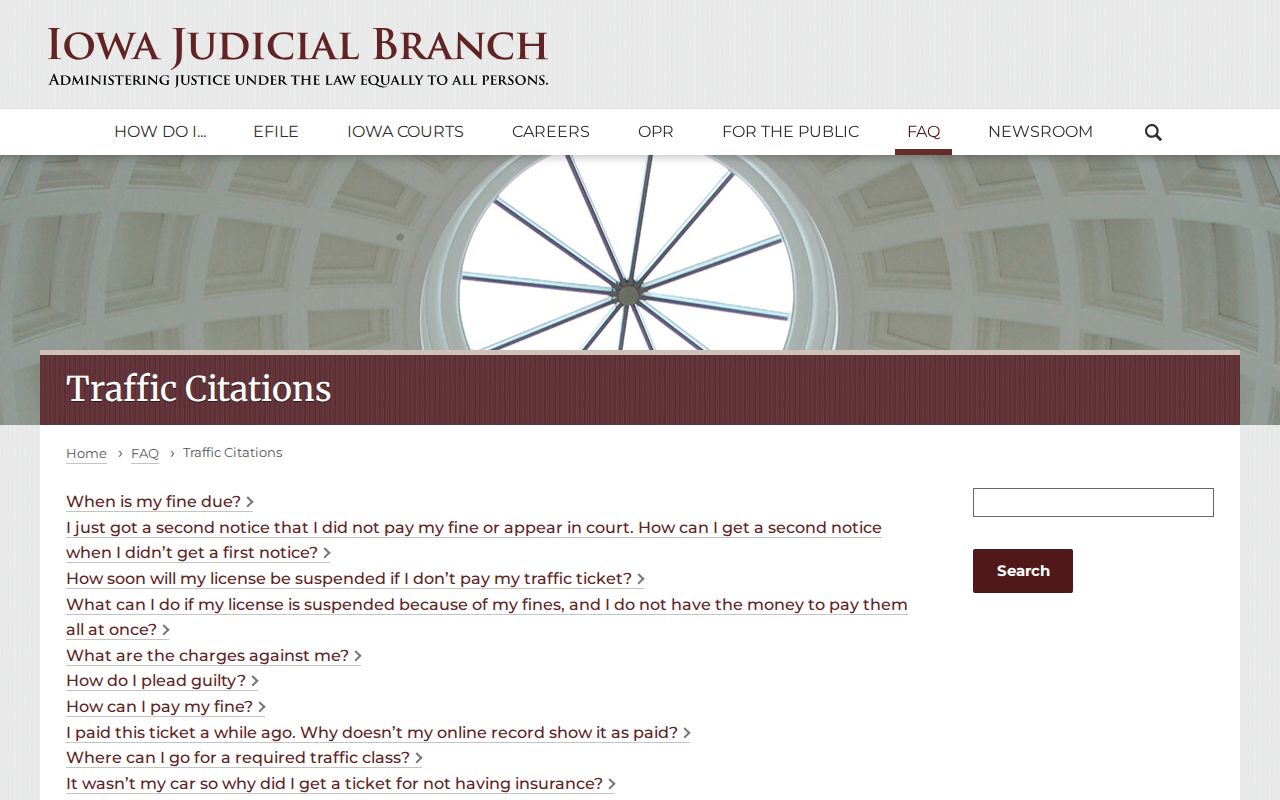
Deadlines matter here. Iowa Judicial Branch traffic guidance puts the fine due on the court date. Its FAQ generally describes driver's-license suspension once a fine is 75 days past due, and the pay-a-fine page says court debt is generally delinquent after 30 days and may affect license or registration renewal. Those are debt consequences, not automatic proof of an arrest warrant. The official traffic-citation guidance explains the deadline and response routes.
The court record must show whether a separate failure-to-appear event led to process under section 805.5. Ask the Palo Alto County Clerk whether the case is in collections, whether a payment plan exists, and what public order controls it. Never infer warrant status from a license notice.
Clearing a Palo Alto County Traffic Warrant
Palo Alto County publishes no universal online warrant-recall process, walk-in clearance desk, or amnesty program. Iowa's statewide court-debt amnesty ended in 2010. A payment plan is not amnesty. The right step depends on the missed event, the court order, bond conditions, debt status, and any other hold.
- Locate the traffic case and verify the issuing Iowa District Court office.
- Ask the Clerk what the docket shows about the missed date and current procedure.
- Consult an attorney when surrender, bond, or a court filing may be required.
- Use only an official payment channel for eligible court debt.
- Confirm that the court entered any recall or new order, then check active status if needed.
Caution: Paying court debt does not by itself prove that a traffic warrant was recalled or cleared.
Palo Alto Traffic Warrant Payment Routes
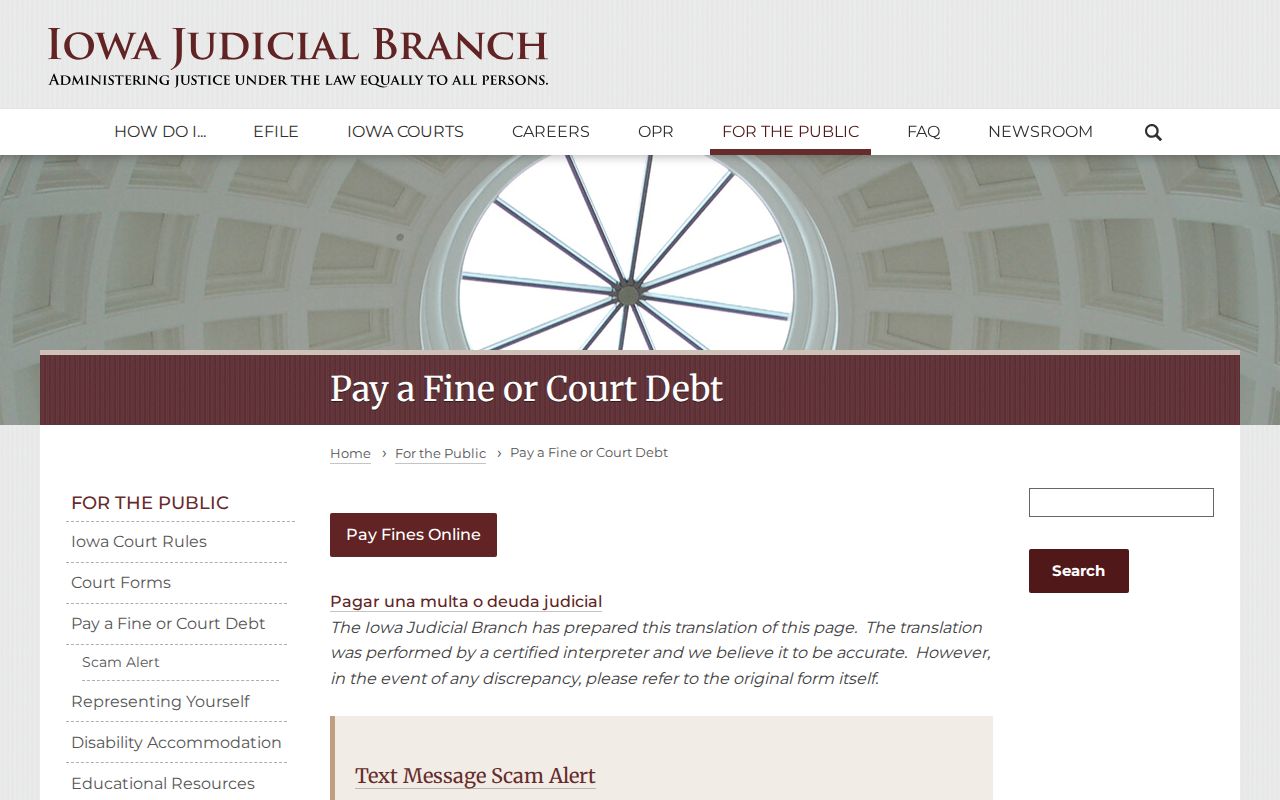
The Judicial Branch lists online, phone, mail, and in-person routes for eligible court debt, and its published payment phone is 515-348-4788. You can request a payment plan in writing or in person through the Clerk. Official guidance describes a $50 minimum for a judge-established plan and a private collection fee of up to 25 percent in applicable cases. Those figures concern debt administration, not bail. The official fine-payment page is the source for current methods and cautions.
Before you pay a Palo Alto County traffic warrant, confirm the case qualifies. Bond, fines, surcharges, collection balances, and jail program fees are separate amounts. If a caller you did not contact pushes a link or number for payment, do not use it.
How Traffic Warrants Trigger License Holds
The steps do not run on autopilot, and they differ case by case in Palo Alto County. A citation opens a district-court case first. Ignoring it can turn the debt delinquent and bring collection action or a hold on your license and registration. Willfully failing to appear is separate, and it can trigger an FTA arrest warrant on its own. Read the docket to see which of these events actually happened.
| Status | Meaning | Best confirmation |
|---|---|---|
| Past-due debt | A court financial obligation remains unpaid | Clerk and official payment record |
| Collection referral | Debt entered a collection process | Clerk and court financial entry |
| License or registration consequence | An administrative effect tied to unresolved debt | Clerk plus the relevant state agency |
| FTA arrest warrant | Court process based on willful nonappearance | Docket, Clerk, and Sheriff |
Clearing one status rarely clears the rest in Palo Alto County. Ask each office what proof or order it needs before you expect reinstatement or a warrant recall.
Verify Palo Alto Traffic Warrant Demands
A June 2026 Iowa Judicial Branch alert flagged scammers who pose as courts and police, threaten warrants over fines or missed jury service, and push prepaid cards, cryptocurrency, Social Security numbers, or links they supply. Treat any claim that instant payment erases a Palo Alto County traffic warrant as something to verify on your own. Open Iowa Courts Online yourself. Call the Clerk at 712-852-3603, the Sheriff at 712-852-3535, or the Judicial Branch payment number. Never use contact details that came with the demand. If someone poses an immediate safety threat, dial 911. When you request a record, point to a specific docket entry, warrant-status record, bond order, or return that already exists. Iowa Open Records Law and the court-access rules let offices withhold or redact protected material, and real copy or staff costs may apply.
Safe check: Verify the court case, payment destination, and warrant status through separate official channels before acting.