
How Municipal Court Warrants Work
The words "municipal court warrant" can lead a Palo Alto County resident straight to the wrong desk. Iowa has a single trial court, the Iowa District Court. Judicial magistrates hear simple misdemeanors, traffic matters, and county or municipal infractions. District associate judges and district judges hold broader criminal jurisdiction. None of the five largest communities keeps a separate municipal warrant docket for the public. A city police officer may still enforce an ordinance, make an arrest, or hand you a citation. The case itself gets filed in Iowa District Court, and the Clerk of Court keeps its record. Skip your court date on purpose and Iowa Code section 805.5 provides for an arrest warrant. Official Iowa sources tend to say "FTA arrest warrant" rather than "capias." Call it a bench warrant only when the court or the record does.
Palo Alto City Enforcement Routes
Where you call depends on what you need. City police handle immediate incidents and street-level enforcement. The Clerk of Court holds district-court case information. The Palo Alto County Sheriff confirms warrant status, shares the weekly public list, and explains safe surrender steps.
| City | Local role | Court route |
|---|---|---|
| Emmetsburg | Police and ordinance enforcement | Palo Alto Clerk |
| Graettinger | City contacts and notices | Palo Alto Clerk |
| West Bend | Police enforce laws and ordinances | Palo Alto Clerk |
| Ruthven | Police enforce laws and ordinances | Palo Alto Clerk |
| Mallard | No official city warrant page found | Palo Alto Clerk |
No city portal exists in Palo Alto County, but that is not a clean bill of health. It simply means the public record lives in the unified state court route, not at city hall.
Municipal Courts Across Palo Alto County
Palo Alto County has no separate municipal courts to list. City ordinance cases move through district court under Iowa's city-government and unified-court framework. The official Iowa court directory shows the statewide structure that routes local matters to district court judges.
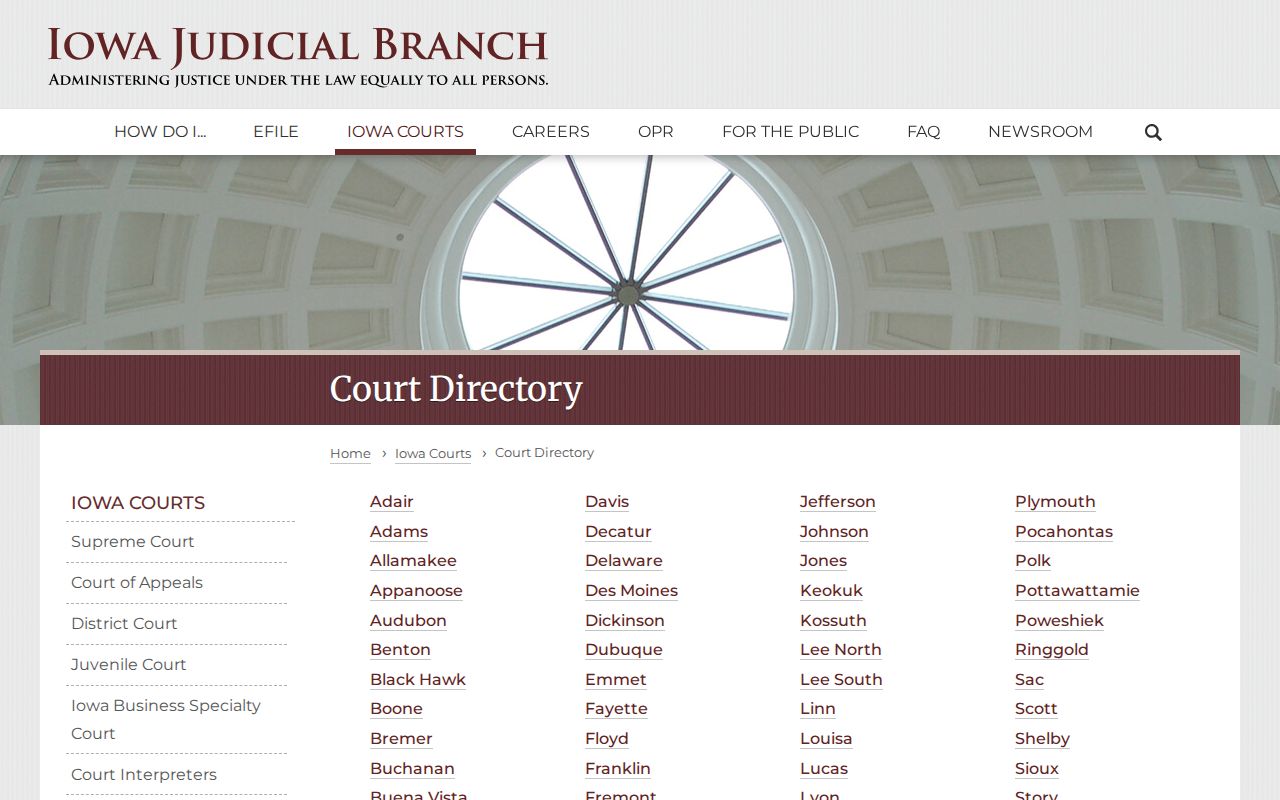
That directory helps you find the right county court. For Palo Alto County, the public-record contact is the Clerk of Court at the Emmetsburg courthouse, not a city-court clerk.
Palo Alto County Municipal Warrant Checks
Palo Alto County and its cities publish no official public warrant search by name. A solid warrant check stacks three things: the Sheriff's weekly list, Iowa Courts Online, and a direct call to confirm.
- Review the Sheriff’s Warrants page and its downloadable weekly list. Treat a match as a lead.
- Search Iowa Courts Online by name, county, and relevant case type.
- Call the Clerk at 712-852-3603 for the district-court case, hearing, filing, and public-record route.
- Call the Sheriff at 712-852-3535 to verify identity, current status, bond information, and safe next steps.
- For material not available through self-service search, make a detailed Judicial Branch records request.
The Sheriff cautions that its list can lag behind updates. Iowa Courts Online may leave out confidential records and some unexecuted warrants. A "no result" from either source is not a clearance letter, so treat it only as a starting point in Palo Alto County.
City Police and Court Records Differ
Emmetsburg Police lists 712-852-2424, and West Bend Police lists 515-887-7000. Ruthven routes emergencies to 911. Graettinger publishes a city office number, 712-859-3742, with no warrant interface. All are real Palo Alto County contacts, yet none replaces the court record or turns a police page into a warrant database.
Key point: A city police contact can address an incident, but Palo Alto County court records remain with the unified Iowa District Court.
Call 911 only in an emergency. Never approach someone because of an online entry. For your own possible Palo Alto County warrant, let an attorney contact the issuing court and law enforcement before you show up anywhere in person.
Municipal Warrants: What They Show
Public sources show different slices of one Palo Alto County case. The Sheriff's weekly list uses a compact format. A court file can add case events, charges, financial entries, and information on how the case ended.
| Warrant number | An agency identifier, when published, such as WARRANT NUMBER. |
|---|---|
| Name and age | Identity fields on the Sheriff list that require confirmation. |
| Charge | The listed basis, which may differ from the full court description. |
| Bond | An amount or no-bond notation when included; current terms need confirmation. |
| Issuing court | Iowa District Court in Palo Alto County, not a separate city tribunal. |
| Status | Current validity must be checked because the weekly list may lag. |
When a City Citation Is Missing
A brand-new citation may not show up right away. Iowa's payment interface warns that posting can take 14 to 21 days. Try alternate spellings of your name, plus a case or citation number if you have one. Select Palo Alto County and the likely case type before you search. Scheduled traffic, nonscheduled traffic, civil infraction, and operating-while-intoxicated codes narrow things down, though a case code alone does not prove an active warrant. City parking violations do not run through Iowa Courts Online either. Ask the city clerk about parking, the county Clerk about a filed case, and the Sheriff about warrant status. Those three offices cover the ground a missing citation leaves open.
Clearing a Municipal Court Warrant
Any municipal court warrant here gets resolved through the Iowa District Court case, not a municipal counter that does not exist. Do not assume paying a fine recalls the warrant on its own. Palo Alto County offers no recall form, safe-surrender event, or amnesty program.
- Confirm the case number, issuing authority, warrant status, and bond terms.
- Ask an attorney or the Clerk what filing, appearance, or payment applies.
- Coordinate any surrender or law-enforcement contact with the Sheriff.
- After acting, confirm directly that the court changed the warrant status.
Warning: Payment, a phone call, or an online search does not by itself prove that a Palo Alto County warrant has been recalled.
Palo Alto Warrant Access Limits
Iowa Courts Online carries public case information, but confidential matters and some unexecuted warrants may be missing. The IOWA System, short for Iowa On-line Warrants and Articles, is limited to criminal-justice agencies. It is not a public statewide warrant portal. Juvenile cases and active investigative material face restrictions too. The Iowa Open Records Law, Iowa Code chapter 22, backs public access while honoring confidential categories. Judicial records also answer to court access rules and custodian procedures. When you request a Palo Alto County record, name the case, the record type, the county, and the date range, and expect possible copying, postage, or staff-time charges.
Verify Palo Alto Warrant Messages
A sudden demand for money is not proof of a warrant. The Iowa Judicial Branch warns residents about scam messages that invoke warrants, missed jury service, or unpaid fines. Real courts never demand prepaid cards or cryptocurrency. They will not ask for a Social Security number through an unverified message either. So end the contact and check on your own through the Clerk's published number, Iowa Courts Online, or the Sheriff. Skip any payment link or callback number the sender supplies. Verifying independently is how you tell a genuine Palo Alto County court matter from an impersonation attempt. Before you call, write down the claimed agency, the number, the payment demand, and the time. Give them nothing personal. Then compare the story against the public court case and ask the official office whether it actually initiated contact. A real city citation still moves through the Palo Alto County court structure. And a caller dropping an Emmetsburg, Graettinger, West Bend, Ruthven, or Mallard place name proves nothing about who sent the message. If the claim involves a relative, let that person or their lawyer make the official case inquiry when possible. Public information can be limited, and staff may ask for identifying details before discussing any record. The goal is accurate routing and current confirmation from the right office. What you want to avoid is a rushed payment driven by fear.